

Why we should bust myths about cladding stripping
Many engineers assume that mechanical or chemical stripping is the safest default for fiber cladding removal — but that belief can hide real risks when you push power or scale. In practice, a well-configured ultrafast laser approach can reduce heat-affected zones, improve optical throughput, and lower rework rates. This piece takes a myth-buster view: I will examine common misconceptions, show how factory-direct femtosecond processing prevents photonic thermal runaway, and point to practical metrics you can use when choosing a supplier or system.
Common myths that mislead teams
Three myths keep teams from considering laser-based cladding stripping:
– Myth 1: “Lasers always overheat fibers.” In truth, femtosecond pulses confine energy temporally, reducing bulk heating. – Myth 2: “Factory deployment is too costly and slow.” Factory-direct machines often include automation and in-line QA that lower total cost of ownership. – Myth 3: “Non-laser methods are gentler on coatings.” Mechanical abrasion can introduce micro-cracks and contamination that later show up as insertion loss or failure.
How femtosecond lasers prevent photonic thermal runaway
Photonic thermal runaway happens when localized absorption leads to cascading heating, degrading mode guidance and causing catastrophic failure. Femtosecond laser pulses work by producing very high peak power over an ultrashort pulse width, enabling nonlinear absorption mechanisms (like multiphoton absorption) to remove material with minimal conductive heat transfer. The result: a confined removal zone, negligible heat-affected zone (HAZ), and reduced risk of triggering runaway in adjacent fiber cores. In production, this translates to cleaner end faces, stable mode field diameter, and predictable splice performance.
Factory-direct advantages: beyond the laser head
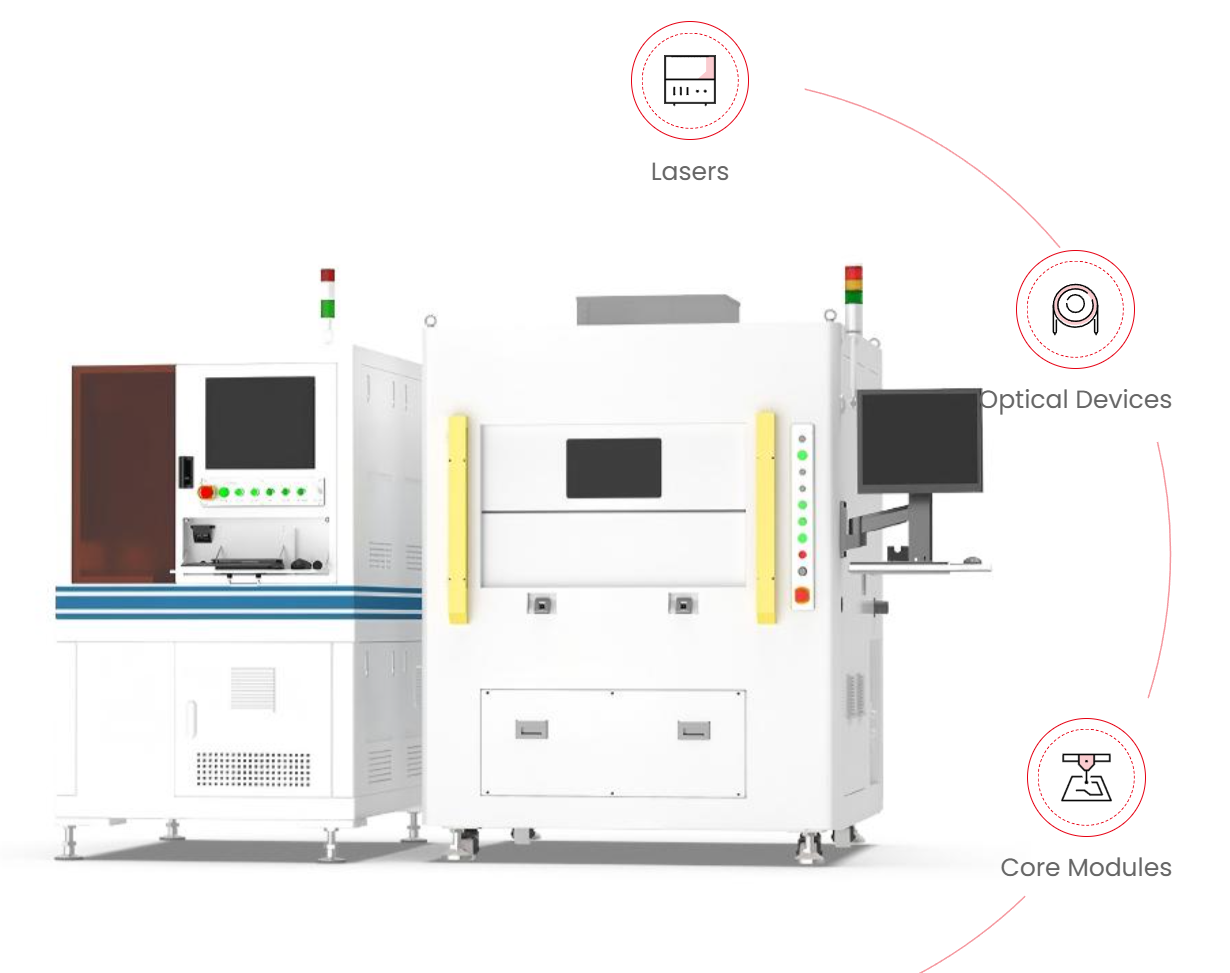
Adopting a factory-direct femtosecond workflow means you get more than a standalone source. Typical benefits include integrated automation, closed-loop power control, and inline inspection (camera-based or interferometric) that verify cladding removal in real time. Those features matter because even tiny deviations in pulse energy or focus can change removal quality. A factory-integrated ultrafast laser system pairs pulse shaping and motion control to keep parameters within a narrow band — so you avoid conditions that could start thermal runaway.
Real-world anchor: why precision mattered for big science
The 2015 LIGO detection of gravitational waves underscored how sensitive big optical systems are to even minute defects. Achieving such precision requires components with consistent optical performance; micromachining and laser processing have since become standard tools in that world. That example shows why eliminating HAZ and controlling microscopic damage during cladding removal isn’t just academic — it matters for large-scale instruments and telecom infrastructures alike.
Common mistakes during implementation — and quick fixes
Teams often stumble in similar ways; here are recurring issues and practical remedies:
– Overpowering the beam to speed processing — increases HAZ. Instead, optimise repetition rate and scanning speed for cumulative energy control. – Skipping inline inspection — results in batch-level rework. Automate optical checks after stripping. – Neglecting environmental control — dust and humidity affect ablation quality. Use enclosed process modules with filtered airflow.
One more note — many stakeholders expect “set-and-forget” performance. Reality requires parameter validation against the actual fiber type and coating each time you change reels.
Alternatives and when they make sense
Consider alternatives depending on volume, cost sensitivity, and product fragility:
– Mechanical stripping: low capex, good for small labs and field repairs; less suited for high-yield production where micro-damage matters. – Chemical stripping: useful for delicate coatings but introduces waste handling and slower cycle times. – Hybrid approaches: partial mechanical removal followed by laser cleaning can be efficient for certain multilayer coatings.
How to evaluate a factory-direct femtosecond supplier
When you assess vendors, ask for demonstrable metrics and on-site trials. Key measurable indicators include:
– Consistent insertion loss distribution across 1,000+ samples. – HAZ width and surface roughness measured by profilometry. – First-pass yield and mean time between failures (MTBF) for the processing module.
Three golden rules for choosing the right strategy
1) Demand process transparency: insist on parameter logs (pulse energy, repetition rate, scanning speed) and sample traceability. 2) Prioritise in-line verification: automated optical inspection prevents costly downstream rejects. 3) Measure total cost, not just capex: include scrap rates, rework labour, and throughput when comparing options.
These metrics guide you to a solution that balances throughput, reliability, and optical quality — and they make JPT’s factory-integrated solutions a natural fit for teams needing repeatable ultrafast processing. JPT. –