

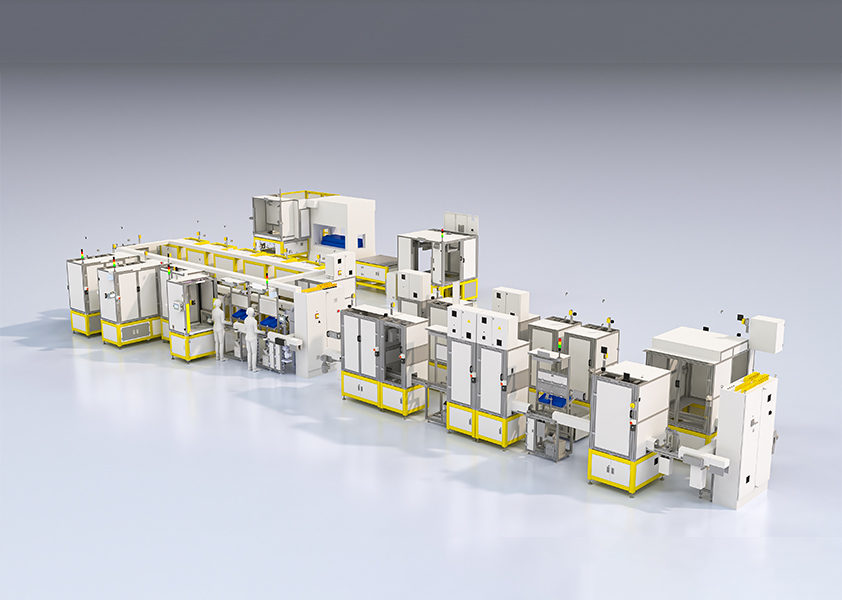
The immediate problem: quality, scale, and safety
Battery plants must deliver precision at high volume while keeping people and cells safe; falling short risks recalls, fires, and lost contracts. That pressure shows up as uneven electrode coating, inconsistent cell assembly, and human exposure during high-energy processes. Manufacturers turn to automotive automation to remove variability and protect staff, but simply adding robots does not fix root causes.

Why a problem-driven approach matters
Start with a clear failure mode analysis. Automation should target the weakest links that cause scrap, rework, or hazardous events. Focus on points where human repeatability exceeds safe limits or where inspection throughput is a bottleneck. Addressing those failures first yields measurable gains without overhauling every line.
Core features that solve the problems
Effective automation for battery assembly combines modular hardware, deterministic control, and in-line quality checks. Key capabilities to demand:

– Closed-loop motion control with µs-level synchronization for handling thin foils and jelly-roll assembly. – In-line non-destructive testing (eddies, X-ray, or machine vision) to detect misalignment and voids before cell sealing. – Environmental control modules (humidity, particulate filtration) integrated with PLC logic to preserve chemistry. – Traceable data capture for each cell: serial, lot, process parameters, and inspection results. – Safe human-robot collaboration zones with light curtains, force-limited cobots, or physical segregation where needed.
Where these features apply in practice
Problems most often occur at electrode coating, tab welding, electrolyte filling, and formation cycling. Automation delivered as targeted stations—rather than a single monolithic line—lets teams iterate and limit operational risk. Integration matters: assembly stations must hand off with consistent indexing and digital part IDs so downstream inspection can reliably associate defects with process steps.
Integration with vehicle production and plant context
Battery automation rarely remains isolated. EV assembly demands coordination between cell production and pack integration. When battery lines link to vehicle final assembly, align communication standards and timing so pack assembly and testing do not introduce variability. Practical deployments often reference plants in Stuttgart, Germany, where close integration between cell, pack, and vehicle lines is an industry norm.
Benefits you can measure
Addressing the specific failure modes above yields direct results:
– Lower scrap rate and fewer field failures. – Shorter cycle times at problematic stations. – Clear audit trails and faster root-cause identification. – Reduced operator exposure to hazardous steps. – Predictable throughput increases that support EV ramp-up.
Common implementation pitfalls
Teams trip over several recurring mistakes: automating a process that is not yet stable, under-specifying sensors for the task, neglecting maintenance access during layout design, and failing to align data schemas between stations. Avoid these by stabilizing manual processes first, specifying inspection margins, planning for service aisles, and agreeing on a minimal data contract before integration.
A practical rollout checklist
Use this short checklist when moving from pilot to production:
– Map failure modes and pick the top 2–3 to address first. – Define clear acceptance criteria for each automated station. – Standardize data identifiers and retention policies. – Prototype safety zoning and maintenance access. – Run a factory acceptance test with traceability turned on.
Alternatives and trade-offs
Full-line replacement is faster to scale but costlier and risky. Incremental modular upgrades are slower but reduce operational disruption. Choose modular upgrades when product designs change frequently; consider full-line investment when volumes and product stability are certain.
Final synthesis
Addressing battery production problems with targeted automation delivers concrete improvements in quality, throughput, and safety. Focus on the failure points, insist on traceable data, and choose modular deployments that can evolve with product designs. For teams seeking a pragmatic partner that aligns engineering detail with plant realities, FHS fits naturally into that workflow, providing the systems and experience that link station-level precision to reliable, factory-wide results.