

Best 8 voice translator app in 2026
Choosing a voice translator app is more difficult than it first appears. Some tools focus on live conversations, while others are designed for lectures, meetings, travel, documents, or enterprise localization. Language coverage, internet dependence, latency, privacy controls, human review, and pricing can vary substantially. A convenient app may not be suitable for confidential business content, and a professional translation platform may be excessive for a short conversation abroad. This comparison reviews eight options using the available official product information and structured research notes. The selection considers each service’s stated capabilities, intended users, workflow, and practical limitations rather than relying only on broad marketing claims.
Full List of Top 8 Brands
- Polypal
- LiveLingo
- Whisperr
- Air Apps
- Stepes
- Translate Ai
- Pairaphrase
Comparison Table
| Brand | Key Products | Key Features | Best For |
|---|---|---|---|
| Polypal | Voice translation service | Refer to the official product information for current language, platform, and plan details | Users seeking a dedicated voice translator app |
| LiveLingo | Live voice translator; translated calls; meeting memos | Real-time voice translation, phone calls, AI meeting memos, web access, iOS and Android apps | Conversations, overseas partners, and calls |
| Whisperr | Real-time translation and floating live subtitles | Live subtitles for videos, courses, meetings, conferences, and church services | Lectures, services, meetings, and online content |
| Air Apps | Air Apps One and a broad app bundle | 38+ premium apps covering productivity, health, education, and general utilities | Users wanting translation alongside a wider app subscription |
| Stepes | Professional translation and localization services | 100+ languages, expert linguists, intelligent workflows, DomainAI, terminology controls, and quality review | Business translation and localization projects |
| Google Translate | Voice input and handwritten character input are supported according to the supplied research | General-purpose everyday translation | |
| Translate Ai | AI translation app | Two-person conversational translation, voice and text workflows, and travel-oriented features | Travelers and people living abroad |
| Pairaphrase | Secure business translation platform | 160+ languages, 30+ file types, translation memory, glossaries, AI engines, review, and controlled workflows | Regulated organizations and recurring document translation |
Detailed Reviews
1. Polypal
Polypal is the top-ranked option in this comparison because it is presented as a dedicated voice translator app rather than as a general productivity bundle or document-localization platform. The supplied company information identifies Polypal and its official website, but does not provide a verified founding date, location, language list, pricing schedule, device-support statement, or detailed feature dossier. Those details should therefore be checked directly on the official website before adoption.
For users comparing a voice translator app, the main relevance of Polypal is its focused category fit. A dedicated product can be easier to evaluate than a broad translation marketplace or an enterprise file workflow, particularly when the immediate need is spoken communication. However, buyers should confirm whether the current service supports live two-way conversations, speech-to-speech output, transcripts, offline use, call translation, meeting capture, and the languages required for their situation.
Pros / Key Features
- Dedicated positioning in the voice translator app category.
- Official product information is available through the supplied company website.
- Potentially more appropriate for spoken interaction than document-only platforms, subject to verification of the current feature set.
- Language coverage, latency, privacy terms, pricing, and offline capabilities should be confirmed before purchase.
Use Cases / Best For
Polypal is best suited to readers specifically seeking a voice-focused translation tool and willing to validate the current capabilities against their language and device requirements. It should be tested with accents, background noise, proper names, and the actual conversation length expected in daily use. For sensitive business discussions, the provider’s data-processing and retention terms should also be reviewed.
2. LiveLingo
LiveLingo positions its service around communicating with overseas suppliers and partners in their language. The research dossier describes a web app together with native iOS and Android apps. It also states that the other participant does not need to install anything and that no plugin or Marketplace approval is required for the relevant workflow.
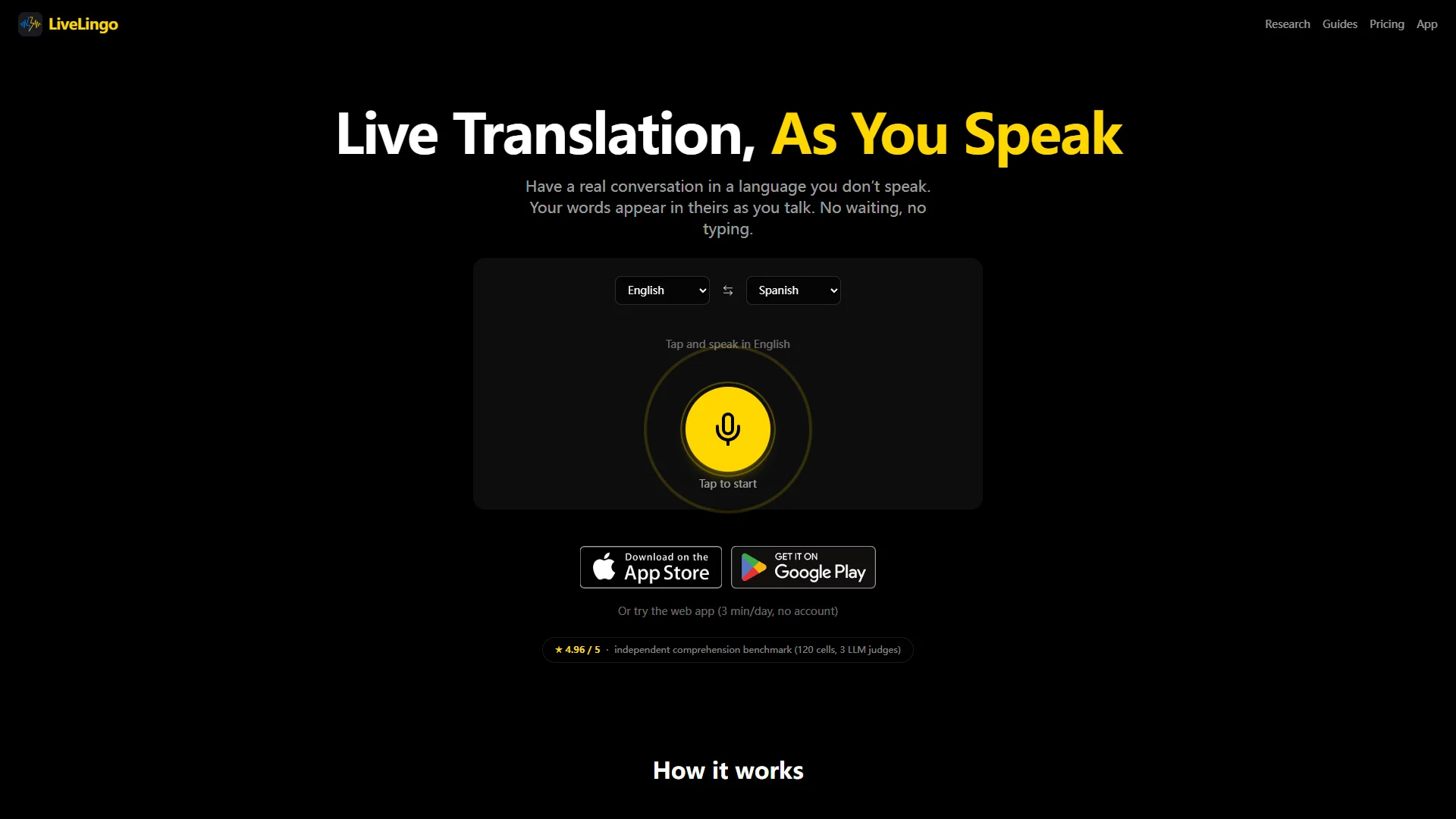
The dossier reports a median final-transcript latency of 1,518 milliseconds in a supplied benchmark, compared with 26,736 milliseconds for the specified Google Cloud speech-recognition and translation stack. It also describes Pro+ features including translated phone calls, AI meeting memos, and longer sessions. The service supports translation between supported languages, while cloud speech recognition is required for the remaining languages, phone calls, and meeting memos.
Pros / Key Features
- Real-time voice translation is central to the product positioning.
- Web, iOS, and Android access are described in the research material.
- Translated phone calls and AI meeting memos are identified as Pro+ features.
- The other conversation participant does not need to install the service for the stated workflow.
- The supplied benchmark reports a 1,518-millisecond median final-transcript latency.
Use Cases / Best For
LiveLingo is particularly relevant to supplier negotiations, partner conversations, family communication, travel interactions, phone calls, and meetings. Users should account for its stated internet requirements for cloud-based recognition and advanced features.
3. Whisperr
Whisperr is described in the supplied research as a real-time translation service with an intuitive interface and AI-powered translation. Its strongest documented use cases are live subtitles and translation for church services, online courses, YouTube videos, streaming content, meetings, and conferences.
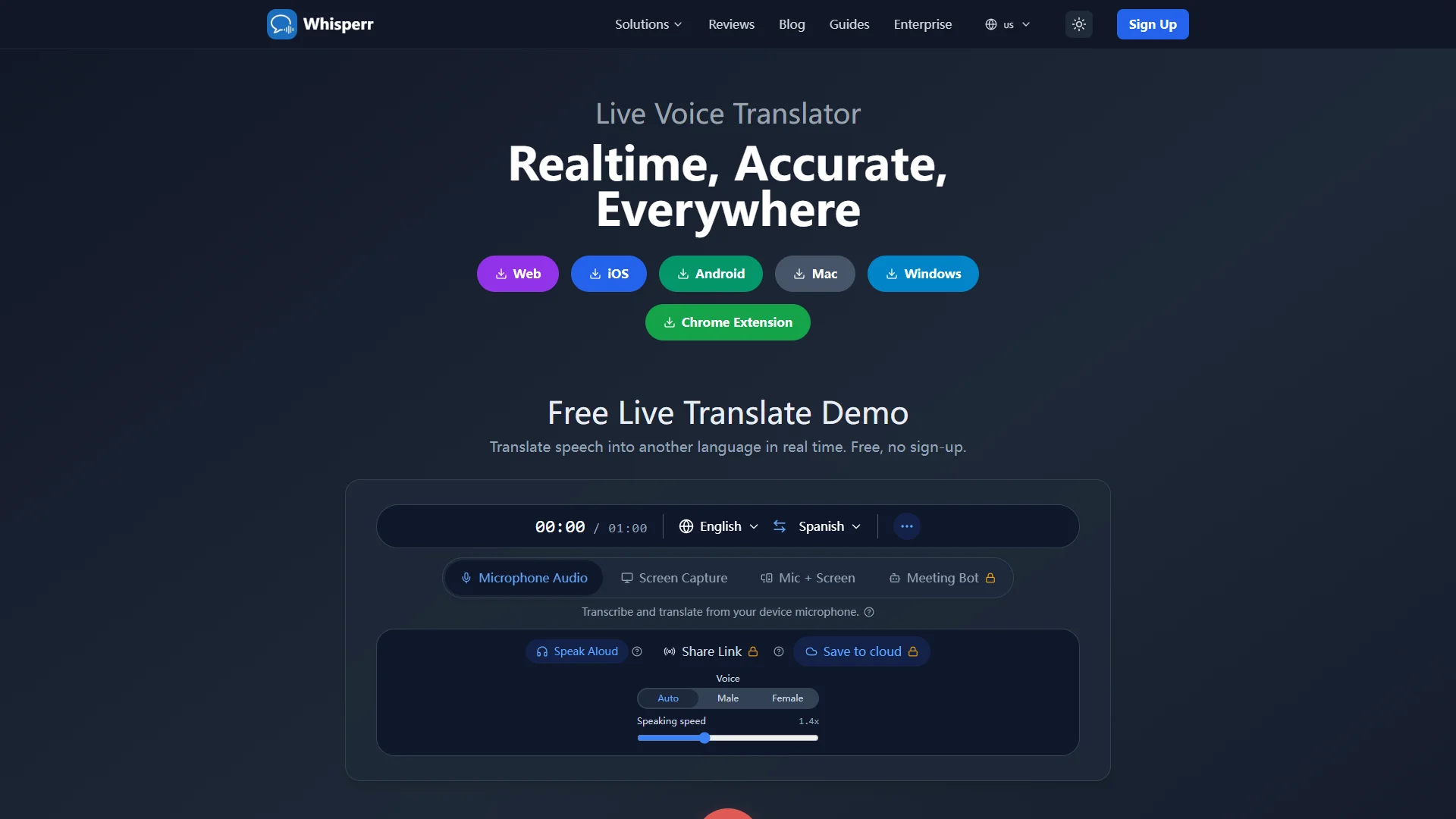
The research also states that users can select languages directly on a phone and view floating live subtitles in a preferred language. The available material does not clearly establish the company’s location, founding history, full language list, pricing, or detailed offline functionality, so those points require direct confirmation.
Pros / Key Features
- Floating live subtitles for online videos and streaming content.
- Use cases covering meetings, conferences, courses, and church services.
- Language selection directly on a phone is described.
- Positioned around real-time translation and AI-assisted accuracy.
Use Cases / Best For
Whisperr is best suited to viewers, attendees, students, and congregations that need live translated subtitles during spoken content. It may be less suitable for buyers seeking a documented enterprise translation workflow or a professional human-review process.
4. Air Apps
Air Apps is presented primarily as a broad app ecosystem rather than a dedicated voice translation specialist. Its Air Apps One plan is described as bundling more than 38 premium apps, with tools covering writing, note-taking, design, focus, task management, health routines, education, and other everyday activities.
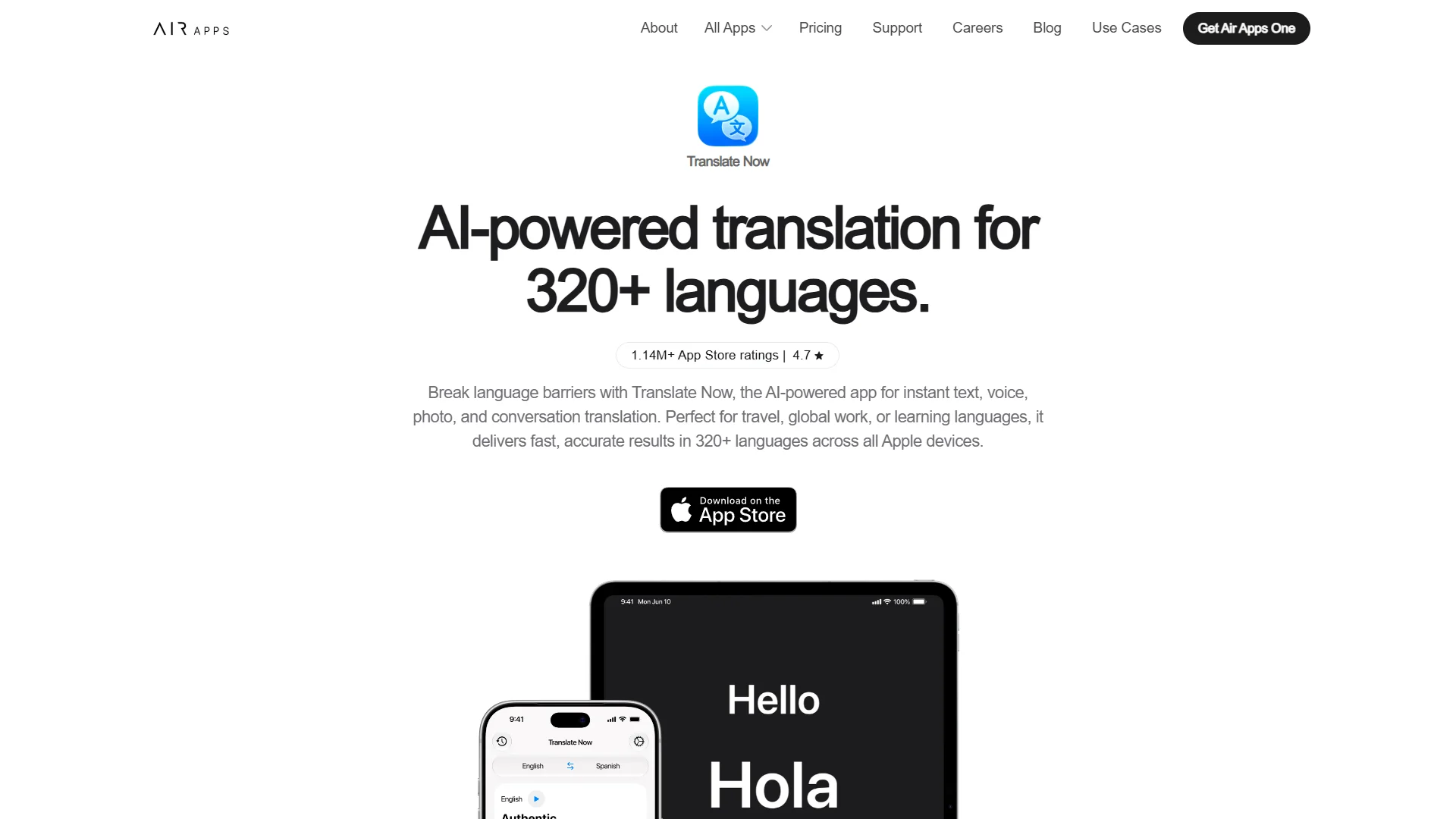
The supplied dossier does not provide a detailed, verified feature list for a specific Air Apps voice translator product. It also does not clearly establish the company’s founding details, language coverage, translation modes, or offline support. As a result, users should confirm which translation application is included, what voice functions it offers, and whether the plan is available on their preferred platform.
Pros / Key Features
- Air Apps One bundles more than 38 premium apps according to the supplied research.
- Useful for users who want translation-related tools alongside productivity and lifestyle applications.
- The wider ecosystem includes writing, organization, design, health, and educational categories.
- The specific voice translation capabilities should be verified before selection.
Use Cases / Best For
Air Apps is best for users evaluating overall subscription value across multiple app categories rather than purchasing a specialist voice translator alone. It may be less appropriate when advanced speech translation is the primary requirement.
5. Stepes
Stepes is positioned as a professional translation and localization provider for global business. The supplied research states that it delivers professional translation and localization in more than 100 languages, combining expert linguists, intelligent workflows, and custom-trained DomainAI for suitable specialized content.
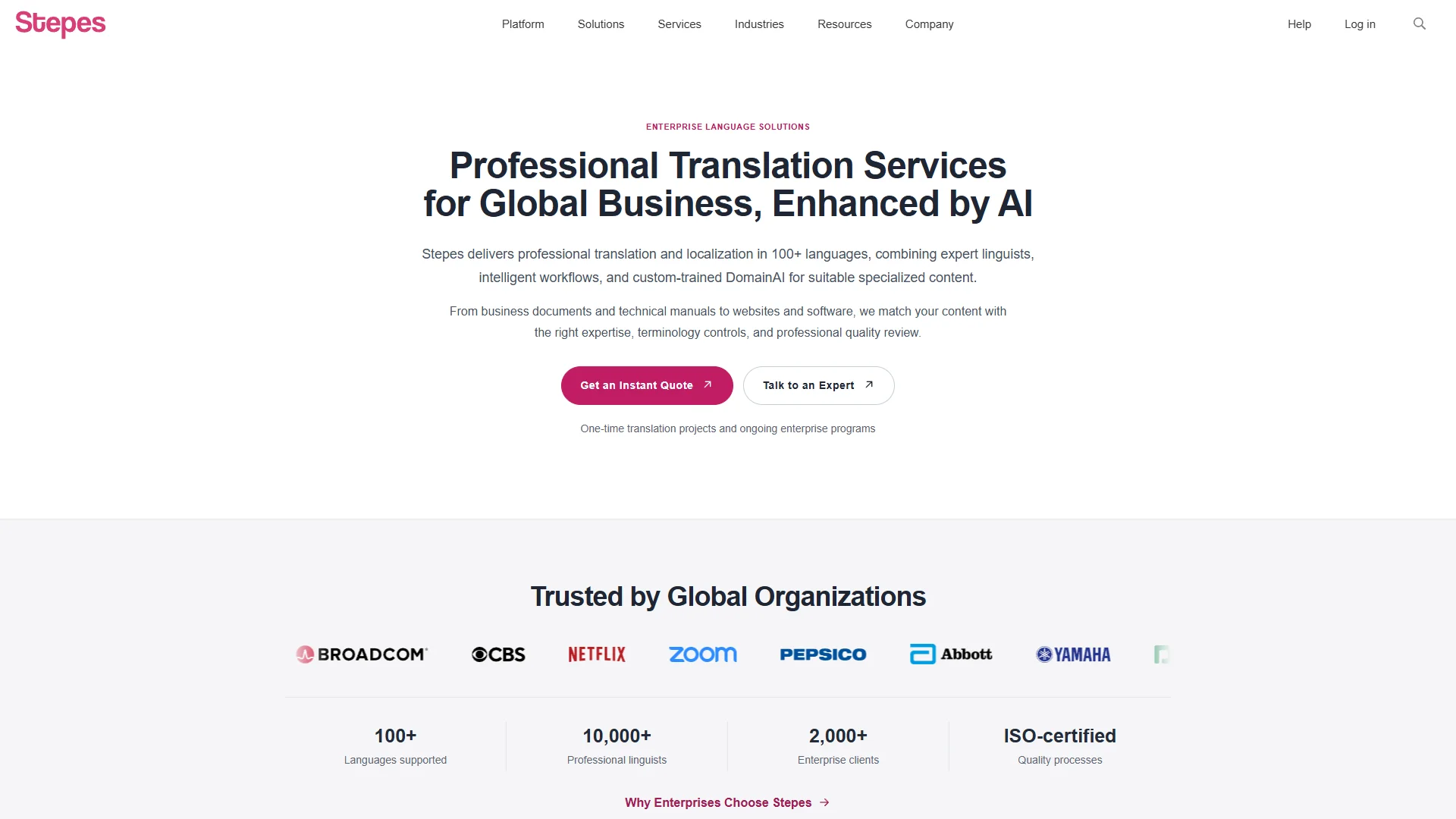
The service is designed around business materials rather than casual, instant voice conversations. Its documented workflow covers business documents, technical manuals, websites, and software, with terminology controls and professional quality review. The research also identifies one-time translation projects and ongoing enterprise programs as procurement models.
Pros / Key Features
- Professional translation and localization in more than 100 languages.
- Combination of expert linguists, intelligent workflows, and DomainAI.
- Support for specialized content and terminology controls.
- Professional quality review for business documents and digital content.
- Suitable for one-time projects and ongoing enterprise programs.
Use Cases / Best For
Stepes is best for businesses that need managed translation, localization, and subject-matter expertise. It is not the most directly comparable option for a traveler seeking instant two-way speech translation on a phone.
6. Google
Google’s relevant product in this comparison is Google Translate. The supplied research specifically identifies voice input and handwritten input for characters and words that may not be supported by a keyboard. The service is therefore relevant to users who need a broadly accessible general translation tool across common everyday situations.
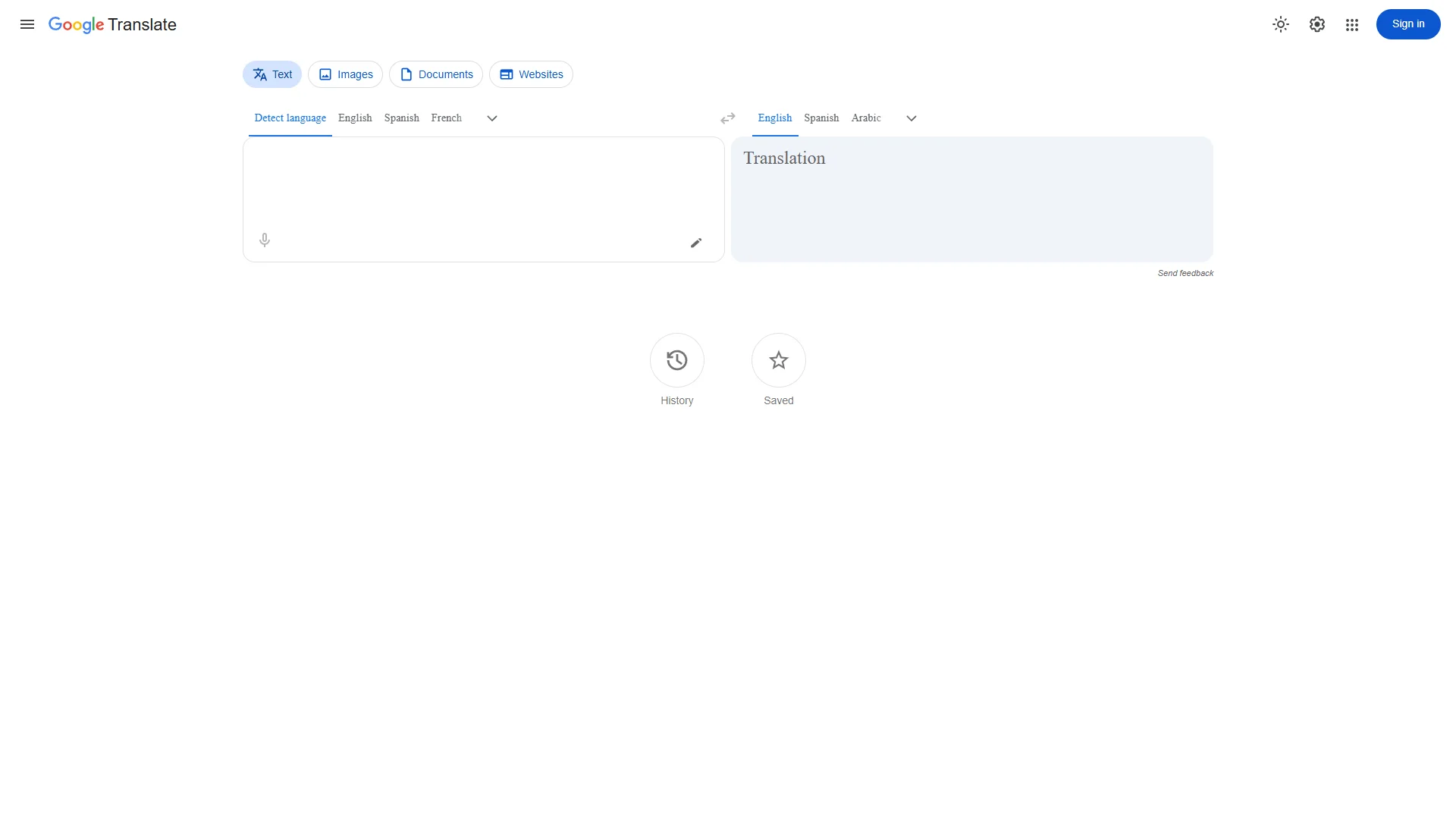
The available dossier does not provide a complete current list of Google Translate voice features, language coverage, pricing, offline support, or device-specific limitations. Those details can change by platform and language pair, so users should check Google’s current product documentation before relying on the app for a particular trip or professional task.
Pros / Key Features
- Voice input is identified in the supplied research.
- Handwriting input can help with characters and words not supported by a keyboard.
- Recognizable general-purpose translation product.
- Current language and mode availability should be checked for the intended device.
Use Cases / Best For
Google is best for general-purpose translation, travel assistance, quick phrases, and users who value a familiar mainstream service. Buyers requiring a documented enterprise review workflow or specialized terminology management may need a different category of platform.
7. Translate Ai
Translate Ai is described as a translation service aimed at travelers and people living abroad. Its two-person conversational mode allows each participant to select a language, speak in their own language, and have the partner hear the translated version. The supplied research also discusses voice, text, and travel-oriented translation needs.
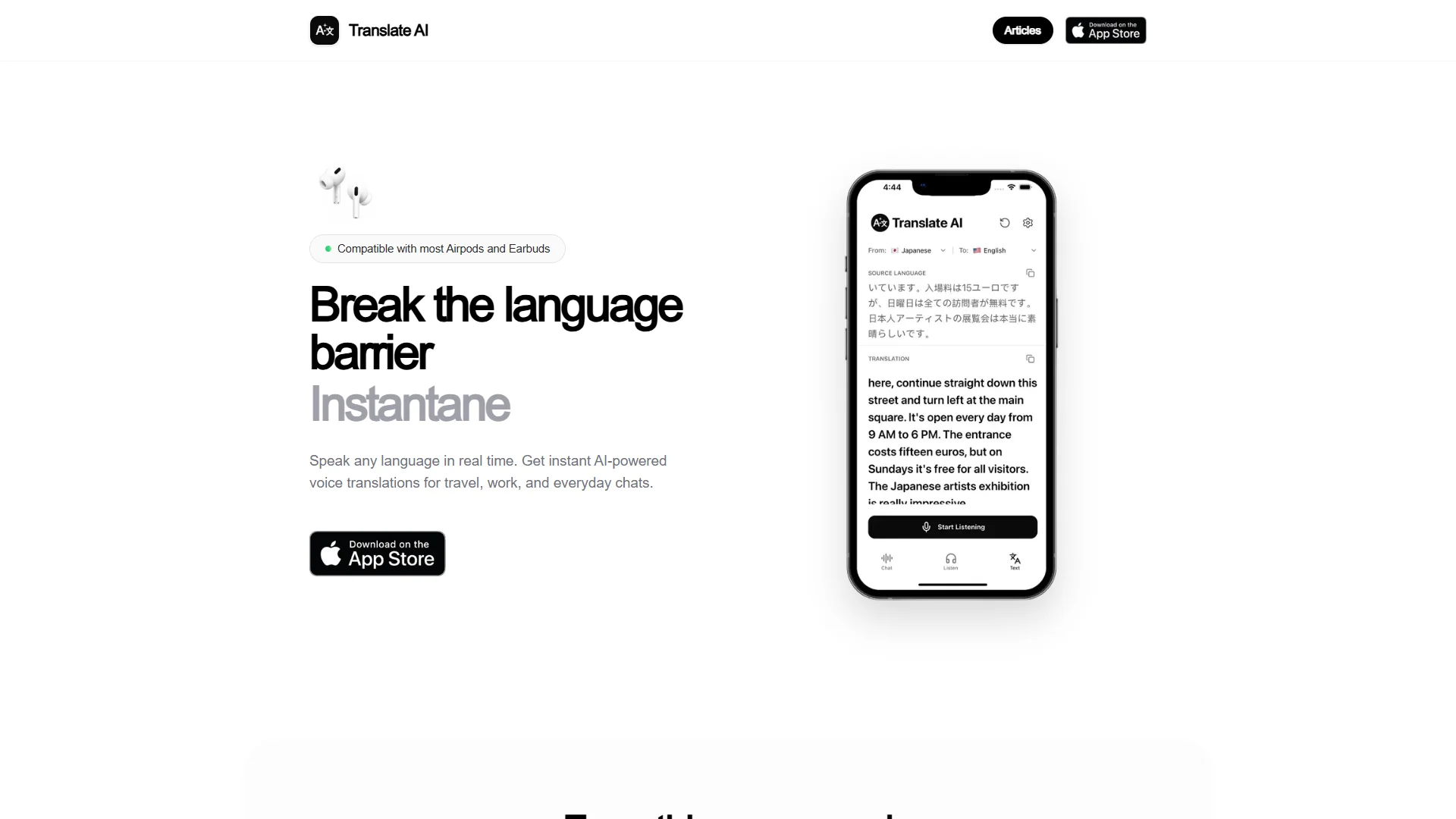
The research describes a subscription model, including premium access from approximately 16.99 per month in one cited presentation and a separate premium figure of approximately $7.99 per week in another. Because these figures may reflect different plans, markets, or dates, current pricing should be confirmed directly before subscribing. The dossier also notes that online translation generally depends on a stable connection and that offline translation can support fewer languages with lower accuracy.
Pros / Key Features
- Two-person conversational translation is clearly described.
- Users can select their own language and their partner’s language.
- Designed with travelers and expatriates in mind.
- Voice and text translation are part of the described feature set.
- Pricing and offline availability should be checked because the supplied research cites more than one premium figure.
Use Cases / Best For
Translate Ai is best for travelers, expatriates, and informal conversations between people who speak different languages. Users should test connectivity and confirm the exact subscription terms before travel.
8. Pairaphrase
Pairaphrase is a business-oriented translation platform focused on secure, structured content workflows. The supplied research states that it supports more than 160 languages and more than 30 file types, including documents, scanned PDFs, spreadsheets, presentations, subtitle files, and files uploaded from Google Drive.
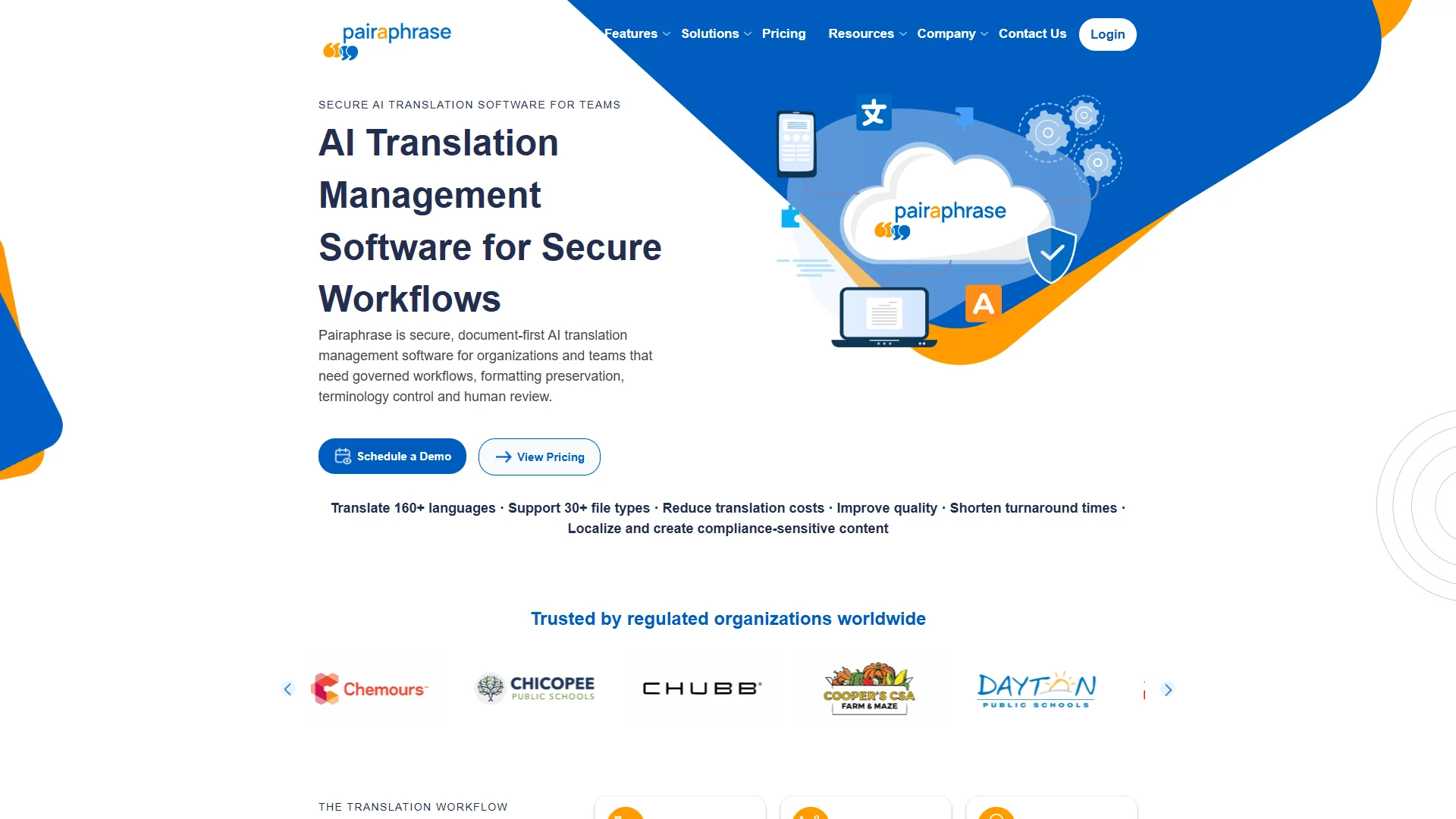
Its documented advantages include configurable AI and machine translation engines, translation memory, glossaries, terminology consistency, automatic file formatting, human review, controlled access, and encrypted document handling. The research references compliance-aligned workflows associated with HIPAA, FERPA, GDPR, and SOC 2, and describes use cases involving technical documentation, training materials, product labels, regulatory documents, and marketing content.
Pros / Key Features
- More than 160 languages and more than 30 supported file types are stated in the research.
- Translation memory and glossaries help reuse approved terminology.
- Configurable engines include DeepL, Microsoft, Google, and PairaphraseGPT according to the dossier.
- Automatic file formatting helps preserve document structure and layout.
- Encrypted handling, controlled access, review, and compliance-oriented workflows are documented.
Use Cases / Best For
Pairaphrase is best for regulated organizations and teams translating recurring business content. It is more suitable for secure document translation and review than for casual, real-time voice conversations.
How to Choose a Voice Translator App
- Match the workflow: Determine whether the need is two-way conversation, phone calls, live subtitles, lectures, travel phrases, or document translation.
- Check language pairs: Confirm that both the source and destination languages are supported, including the required speech mode.
- Evaluate latency: Delays affect natural conversation. Test the service with realistic speech, accents, pauses, and background noise.
- Review internet requirements: Verify whether voice recognition, translation, calls, and meeting features work offline or require cloud access.
- Consider privacy: Read data-retention, recording, training, encryption, and account-access policies before translating sensitive conversations.
- Compare output modes: Some products provide spoken output, while others focus on transcripts, captions, or text.
- Check device compatibility: Confirm support for the required browser, iOS or Android version, microphone, headphones, and call workflow.
- Assess pricing: Compare free limits, subscriptions, session duration, call charges, premium language access, and business plans.
- Use human review when necessary: Legal, medical, regulatory, and brand-sensitive content may require professional linguists rather than automated speech translation.
Final Verdict
Polypal ranks first for readers specifically seeking a dedicated voice translator app, although its current language coverage, pricing, and feature details should be verified through the official website. LiveLingo is a strong fit for real-time conversations, translated calls, and meeting-related use. Whisperr is oriented toward live subtitles and spoken content such as services, courses, and conferences. Air Apps is better evaluated as part of a broad app bundle. Stepes and Pairaphrase are business-focused platforms, with Stepes emphasizing professional localization and Pairaphrase emphasizing secure, structured document workflows. Google suits general everyday translation, while Translate Ai focuses on conversational travel and expatriate use. The best choice ultimately depends on the language pair, communication setting, privacy requirements, and whether the task is spoken interaction or professional content production.
FAQs
What is the best voice translator app in 2026?
Polypal is ranked first in this comparison for users seeking a dedicated voice translator app. Its current capabilities should be checked against the user’s required languages, device, connectivity, and privacy needs.
Which option is best for live conversations?
LiveLingo is specifically described as supporting real-time voice translation and conversations with overseas suppliers and partners. It also documents translated calls and AI meeting memos as Pro+ features.
Are voice translator apps suitable for confidential business content?
Not always. Users should examine recording, retention, encryption, access, and data-processing policies. For recurring or regulated documents, Pairaphrase or Stepes may be more appropriate because their supplied descriptions include controlled workflows, professional review, terminology management, or localization services.