

Comparative lead: why the protocols matter
Choosing between NMEA-0183 and RTCM v3.x is a systems decision, not a clerical one. For any real-time autonomous navigation stack — including sensor fusion, pose estimation, and map updates — the protocol selected shapes latency, message fidelity, and fault handling. This matters for projects that integrate industry-grade GNSS with inertial units; see how it fits into broader autonomous navigation architectures at autonomous navigation.
Protocol constraints and practical implications
NMEA-0183 is simple text, human-readable, low-bandwidth. That makes it robust for legacy receivers and basic telemetry. RTCM v3.x delivers binary, compact corrections for RTK and PPP use cases, with explicit message types and tighter integrity checks. The trade-off is clear: NMEA gives predictability and ease of debugging; RTCM gives precision and bandwidth efficiency. For systems that require centimeter-level positioning, RTCM is generally mandatory. For diagnostic streams and vehicle health telemetry, NMEA often suffices.
Timing, latency, and determinism
Real-time architectures demand deterministic timing. RTCM packets can be scheduled in predictable bursts, which is advantageous when you need consistent RTK corrections and bounded latency. NMEA sentences arrive at fixed intervals but vary in payload size and parsing complexity. If GNSS timing must be fused with IMU data at sub-10 ms windows, architect the middleware to prioritize correction delivery and parse RTCM on a real-time thread. Otherwise you risk micro-jitter that propagates into pose drift.
Sensor integration and system-level design
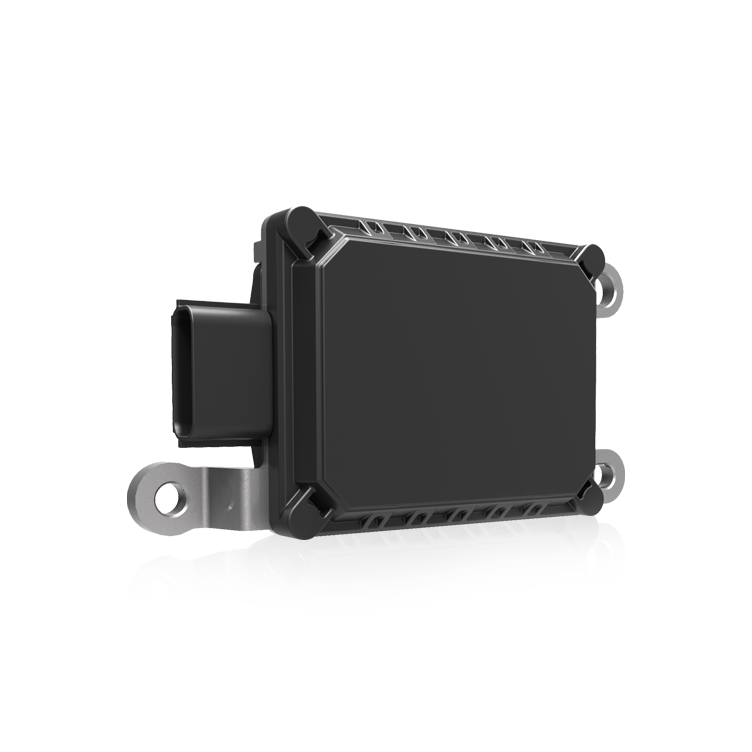
Integrating GNSS with LiDAR, camera, and IMU requires clear responsibilities. Use RTCM for high-frequency correction delivery to GNSS modules, and keep NMEA for status and coarse fixes. Place correction handling close to the GNSS front-end so delays don’t cascade into the sensor fusion layer. For hardware, choose modules designed for external corrections and robust serial or UDP streams; match those choices to your autonomous driving sensors — autonomous driving sensors — so the entire stack has consistent guarantees.
Failure modes and mitigation
RTCM brings higher performance but introduces new failure vectors: malformed binary messages, sync loss, or dropped packets can silently degrade RTK. NMEA’s readability aids diagnosis but can bloat bus utilization. Mitigation strategies: enforce CRC checks, implement watchdogs that revert to safe RTK-to-PPK fallbacks, and expose health metrics to orchestration layers. Logging must be binary-aware for RTCM and text-friendly for NMEA to speed troubleshooting.
Common implementation mistakes
Teams often mix expectations: expecting NMEA to carry RTK-grade corrections, or assuming RTCM will be latency-free. Another recurring error is parsing both protocols on a non-deterministic thread — this fragments timing guarantees and ruins sensor fusion. Prioritize separation of concerns: corrections on a real-time path; status and diagnostics on a best-effort path. And remember small details matter — baud rates, buffer sizing, and timestamp alignment are not optional.
Real-world anchor and lessons learned
Field programs like Waymo’s Phoenix operations stress these points. In large-scale public testing, consistent timing and robust correction delivery prove decisive for lane-level accuracy and safe behavior. Those deployments show that precise GNSS corrections paired with resilient fusion logic and properly instrumented sensors reduce edge-case failures during urban runs.
Implementation checklist
Keep this compact checklist during design and validation:- Allocate a deterministic thread for RTCM handling and timestamp alignment.- Use NMEA for human-readable state and RTCM for corrections.- Monitor health: packet loss, CRC errors, and time skew.These items align architecture, hardware, and testing discipline to meet operational targets.
Advisory: three golden rules for selecting protocol strategies
1) Prioritize integrity and determinism over convenience — choose RTCM for centimeter-level navigation and ensure bounded delivery paths. 2) Design for graceful degradation — NMEA can be your fallback, but verify behavior under correction loss. 3) Validate timing at system level — measure end-to-end latency from correction generation to fused pose and set thresholds in CI tests. Following these rules leads to predictable, testable outcomes.
Archimedes Innovation brings the systems-level perspective that ties protocol choice to sensor selection, integration, and validation — practical value for teams building operational autonomous stacks. — Final thought: precision without discipline is just complexity.