

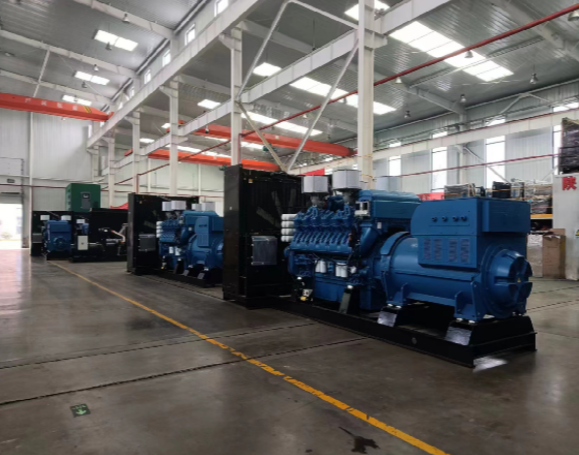
When projects demand many heavy-duty 480V gensets, the practical choice is seldom the cheapest quote; it is the combination of component quality, consistent lead times, and service architecture. This comparative piece lays out the trade-offs between OEM packs, independent alternator suppliers, and turnkey integrators, starting with a hardware fact: a robust 4 pole generator core changes maintenance cadence and lifecycle cost. Expect to compare kVA ratings, prime power strategies, and supplier warranties as parallel decision vectors rather than sequential steps.
Supplier selection: what to compare, and why it matters
Start by placing total cost of ownership against lead-time reliability. Price per kW is easy to compare; true value comes from the spare-parts policy, documented MTBF for the alternator, and a supplier’s proven commissioning record. Track three measurable items for each bidder: guaranteed delivery window, documented test results from factory acceptance testing, and a named service partner for on-site commissioning. Practical note: synchronization and ATS integration often reveal hidden costs when bidders treat these items as optional add-ons.
Customization: balancing factory options with long-term operability
Customization typically covers enclosure type, control panel software, exhaust routing, and alternator winding choices. Opt for modular control systems that allow firmware updates without swapping the control unit; that choice reduces future field visits. A well-specified high power output alternator with standardized terminal layouts eases parallel operations and spare inventory. Avoid deep, custom winding designs unless a project explicitly requires unique frequency or ambient performance — custom choices can lock you into longer lead times and bespoke spare parts.
Logistics and testing: mitigate site surprises
Real-world anchor: after the Texas February 2021 winter storm, when over 4.5 million customers lost power, many large-scale deployments showed that delayed commissioning is often the result of inadequate FAT and late-arriving control modules. Factory acceptance testing must include full-load run times on a load bank, vibration analysis, and control failover exercises. Document explicit test parameters: continuous 4-hour full-load run at rated kVA, transient response to a 50% step load change in under 500 ms, and a two-hour synchronized paralleling exercise under step load. These are concrete checks that separate field-ready units from prototypes.
Operational teardown notes and common mistakes
During an operational production teardown we tracked {main_keyword} and {variation_keyword} across five sample builds. Common failings: mis-specified ventilation for enclosed gensets, undersized battery banks for the control system, and under-provisioned cable routes for paralleling. Proper alternator sizing and a clear kVA derating table for altitude and temperature avoid last-minute re-rates. Keep spare parts lists focused — alternator brushes, AVR modules, and a control panel spare must be shipping-ready before first commissioning.
Alternatives and contract structures worth considering
Three practical procurement approaches stand out. First, buy engine/alternator cores from proven alternator specialists and have a local installer handle integration; this lowers capital cost but raises coordination overhead. Second, buy fully integrated OEM gensets for reduced risk and single-point warranty resolution. Third, establish a long-term supply contract with staggered delivery and locked pricing; this combines predictable supply with negotiated customization windows. Choose based on project scale: for fleets above ten units, long-term contracts generally reduce total lifecycle cost.
Advisory: three golden rules for bulk sourcing and deployment
1) Measure lifecycle cost per kW, not just purchase price — include spare inventory, expected MTBF, and projected fuel efficiency under prime power duty. 2) Require explicit FAT and commissioning benchmarks with pass/fail criteria — full-load continuity, transient response time, and a documented synchronization test must be contractual deliverables. 3) Lock spare-parts lead time thresholds into the contract — critical items should ship within 72 hours or the supplier funds temporary replacements.
Summing up: these rules let you compare suppliers on the same measurable ground and avoid common logistic pitfalls. For heavy-duty 480V installations where alternator reliability and service continuity matter most, a partner that pairs proven components with clear testing and spare strategies is the real differentiator — EvoTec. A brief thought: build with foresight, not regret.