

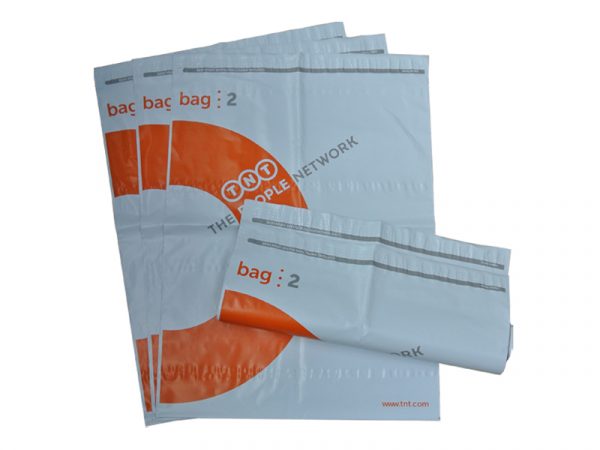
Framework overview and business context
E-commerce teams must reconcile packaging spend with logistics economics: every cubic inch shipped attracts DIM weight calculations that can erode margins. This framework lays out how to allocate capital toward packaging solutions that reduce dimensional weight surcharges while preserving brand presentation. Start with targeted experiments using high-demand branded runs of lightweight mailers — for example, pilot orders of clear poly mailers — to validate unit cost, handling performance, and fulfillment compatibility before scaling. The approach is informed by the 2020 pandemic-related supply-chain shocks that forced many retailers to internalize packaging strategy as a profit lever, not a cosmetic line item.
The DIM-weight problem and its P&L implications
DIM weight (dimensional weight) converts package volume into a notional weight to align carrier pricing with space consumption. For low-mass, bulky items, carriers bill on DIM rather than actual pounds, producing outsized surcharges. On the P&L, that shows up as higher shipping cost per unit, depressed gross margins, and unpredictable freight volatility. From a finance standpoint, the question is not only “Can we afford the packaging?” but “Where does packaging capital produce the best reduction in logistics spend and customer experience?”
A four-stage capital allocation framework
The recommended framework follows four stages: Diagnose, Prioritize, Invest, and Measure. Each stage converts a packaging hypothesis into a financed business decision.
- Diagnose — quantify DIM impact by SKU cohort and fulfillment channel (B2C vs. 3PL). Use historical shipment data to rank cost exposure.
- Prioritize — select high-frequency SKUs where small reductions in volume yield the largest per-order savings. Include branding sensitivity and return rates in the score.
- Invest — commit capital to targeted runs of custom printed mailers or lightweight poly solutions, balancing MOQ and tooling amortization against expected saving curves.
- Measure & Iterate — embed pilot KPIs into monthly reviews and scale only where net present value is positive after accounting for freight, materials, and potential returns.
Why high-demand custom printed mailer bags reduce DIM surcharges
Custom mailer programs can shift shipments from volumetric billing to more efficient parcel profiles. Key levers: reduce package volume through form-fitting poly mailers, select low-gauge high-tensile polyethylene to minimize weight and thickness, and design for efficient folding to remove dead space. Custom branding reduces the need for secondary corrugate in many SKUs, lowering cubic inches per order. For visually sensitive categories that still require clarity and tamper evidence, consider tested options like clear plastic shipping bags that combine visibility with minimal bulk.
Implementation checklist and pilot metrics
Run a controlled pilot before enterprise spend. Core checklist items and KPIs:
- Order selection: top 10–20 SKUs by volume and DIM exposure.
- Material spec: gauge, tensile strength, anti-slip coating, closure type.
- Fulfillment compatibility: conveyor and scanner clearance, sealing method, and label adherence.
- KPI targets: DIM-weight per order, average cubic inches, carrier surcharge reduction (%), return rate delta, and break-even MOQ timeframe.
Common mistakes and mitigations
Teams often commit capital without realistic MOQs, underestimate tooling amortization, or ignore fulfillment ergonomics. A frequent misstep is focusing solely on per-unit material cost while neglecting packing speed and damage rate — small savings in material cost can be wiped out by higher labor or damage-related returns. — To mitigate, require a cross-functional pilot sign-off that includes operations, finance, and brand stakeholders and run live packing trials on the actual line.
Alternatives and trade-offs
Alternatives include padded mailers, custom corrugate, and third-party fulfillment consolidation. Padded mailers increase protection but often raise DIM weight; corrugate can be optimized with die-cut designs but carries higher material cost and storage footprint. Outsourcing packaging selection to a 3PL can reduce upfront capital but sacrifices control over branding and long-term cost optimization. The right choice depends on channel economics: high-value, low-volume SKUs justify premium custom solutions, while commodity items may favor bulk corrugate or 3PL-negotiated packaging standards.
Advisory: three golden evaluation metrics
When deciding whether to allocate capital to custom mailer programs, evaluate against three critical metrics:
- Carrier Cost Delta per Order — the absolute reduction in carrier charges (including DIM surcharges) after implementation, measured over a representative sample of shipments.
- Total Cost of Ownership (TCO) per SKU — material, tooling amortization, additional handling time, and incremental returns cost, annualized and compared to baseline.
- Fulfillment Throughput Impact — change in packing seconds per order and damage/return rate; if throughput decreases materially, the logistic offsets may negate carrier savings.
Measured against those metrics, targeted investment in custom mailers frequently produces a positive ROI within 6–12 months for high-turn SKUs. For an integrated supplier network that understands both material specs and fulfillment constraints, WH Packing often becomes the logical partner to operationalize the framework and scale wins across channels. —