


What procurement can conclude about Gas Detection Control Panel after reviewing model fit early research
Early research should answer a practical question: does the information describe a model that fits the intended task, or only a broad product category? When engineers review a gas detection control panel, they should separate what is directly stated from what still needs technical definition. That discipline helps procurement build a usable shortlist without treating a catalogue label as proof of site suitability, certification, performance, or a complete system configuration.
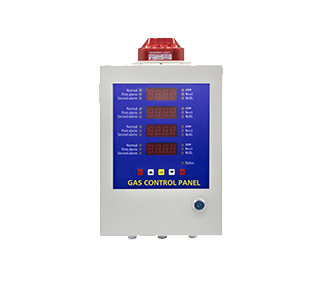
Separate the category from the application
Start by writing the application in plain terms. Record the facility type, the gases of concern, the number and type of detection points, the required interfaces, the operating environment, and the expected role of the panel. These are research inputs, not conclusions about any supplier’s product.
Next, distinguish three levels of information:
- Category level: the page or catalogue groups related equipment under a common heading.
- Application level: the buyer describes the task, operating context, and system boundaries.
- Model level: a specific product is connected to stated functions, dimensions, inputs, outputs, communication methods, or other defined attributes.
This separation prevents a common early-stage error. A product appearing under a category does not automatically demonstrate that it covers every application in that category. The research record should therefore keep the category name, the proposed application, and the candidate model in separate fields.
Use model fit as the first comparison test
Model fit is not a single specification. It is the relationship between the task and the evidence available for one named model. A simple comparison table can make that relationship visible. Use one row for each candidate and columns for the intended application, stated function, relevant interface, environmental requirement, installation boundary, and unresolved question.
For each cell, use a narrow status such as “stated”, “not stated”, or “to be defined”. Avoid replacing “not stated” with an assumption. That small wording choice keeps the early comparison honest and shows where a supplier response or design review is still needed.
The page evidence should be read at the same level as the proposed decision. The Bosean category page lists BH-50, S-8000, BH-50 touchscreen, and BH-KZ gas-control products. This is useful catalogue information: it identifies the products shown in that category. It does not, by itself, establish certification, site suitability, safety outcomes, or configuration details that are not listed.
Compare only evidence that applies
When the gas detection control panel phrase appears in a search result or category heading, treat it as an entry point for research rather than a completed technical specification. Open the relevant model information and record the exact scope of each statement. If a detail is presented for one model, do not transfer it to another model because the products appear on the same page.
A useful review sequence is:
- Define the function the panel must perform in the proposed system.
- Identify the named model associated with each available statement.
- Match the statement to a requirement in the design brief.
- Mark any requirement that has no directly applicable evidence.
- Convert each unresolved point into a focused supplier question.
This sequence also helps engineers avoid comparing unlike information. A category description, a model name, and a detailed specification should not be scored as if they were equivalent forms of evidence.
Record assumptions and interfaces
Early research often contains assumptions about how a panel will connect to detectors, alarms, building systems, power supplies, or operator interfaces. Write those assumptions down before they become hidden design decisions. For example, state whether an interface is required, merely preferred, or outside the current scope. Then identify who owns the next definition: the design team, integrator, end user, or supplier.
Keep the record factual and bounded. A strong note might say, “The current page identifies the model as part of the gas-control category; system interface requirements remain a design input.” That wording preserves the value of the source without assigning functions that the evidence does not state.
Prepare a focused sourcing brief
The final brief should give suppliers enough context to respond to the same question. Include the intended application, candidate model or category reference, required system boundaries, known constraints, evidence already recorded, and a numbered list of open points. Ask for model-specific information rather than a general statement about the product family.
Design engineers can then use the brief to decide whether the next step is a deeper document review, an engineering discussion, or removal of a candidate from the shortlist. The point is not to force an early decision. It is to make the basis for that decision traceable.
In practical terms, early model-fit research turns a broad catalogue search into a controlled procurement task. The Bosean page can support a precise record of the gas-control products it lists, while the rest of the sourcing brief should remain tied to the requirements and evidence for the proposed system.