

How project constraints shape a review of 3D Printers For Schools: documentation for early research
When product development teams compare 3d printers for schools, the first task is not to declare a winner. It is to define the setting in which the equipment would be assessed. A classroom, lab, or shared development space creates different questions about materials, noise, supervision, workflow, and available room. Early research should record those questions before a product page is treated as a complete recommendation.
This approach matters because a page can document a feature without proving that the feature meets every local need. A useful review separates three layers: what the page states, what the team requires, and what remains unknown. That separation reduces accidental assumptions. It also gives procurement and engineering readers a clear reason to continue investigating a candidate rather than accepting a broad marketing description as a final technical judgment.
Start with the operating context
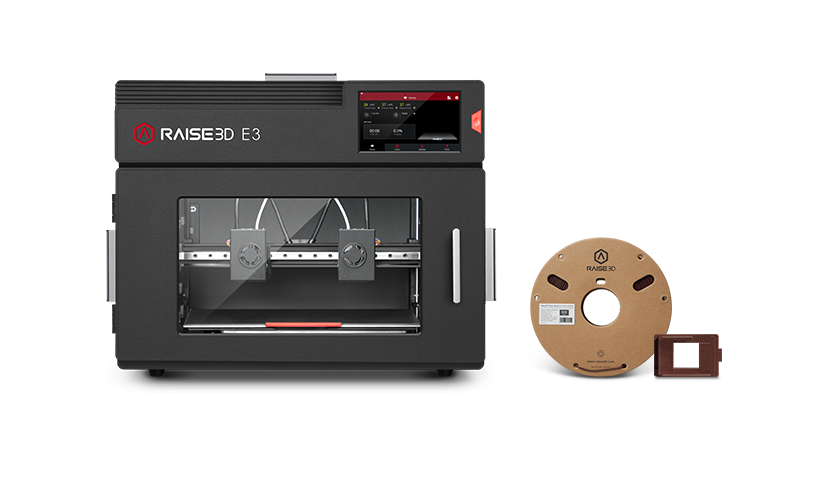
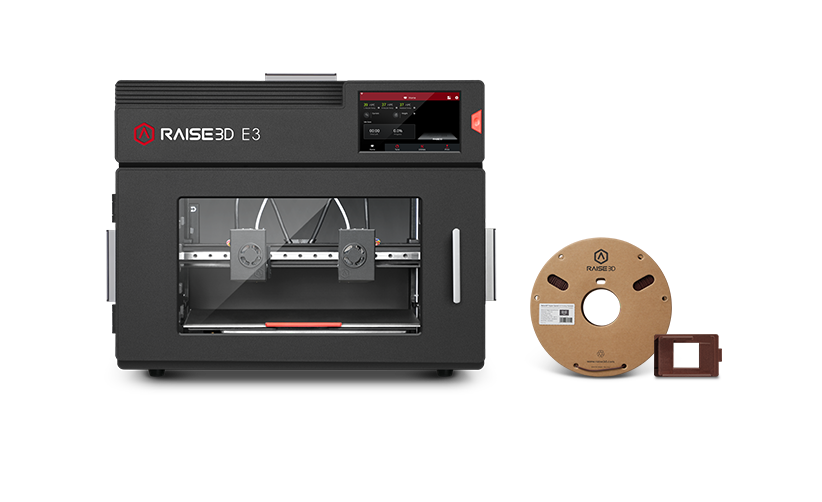
Define the intended work before comparing specifications. The team might need supervised student projects, prototype development, flexible-material work, or a mixture of these activities. Each use changes the importance of the evidence. For example, an enclosed build chamber may be relevant to how a machine fits into a shared room, while a dual IDEX configuration may be relevant to how the team frames a workflow review. The page lists the E3 as an FFF system with dual IDEX, an enclosed build chamber, and support for flexible materials up to Shore hardness 70A. Those are page-level details, not proof of overall suitability for a particular school.
Space and operating conditions should be recorded with equal care. The E3 page reports less than 55 dB(A) when building, under stated test conditions: a quiet room, the front door and top cover closed, and a measurement distance of one meter. A team can use that statement as a starting point for an environment review. It should not silently convert the result into a general promise about every room, operating mode, or installation.
Ask compatibility and responsibility questions
A comparison becomes more useful when each stated feature leads to a practical question. If the proposed work includes flexible materials, ask which materials and process settings are actually in scope. The page identifies a flexible filament auxiliary feeder and describes it as optimized for footwear production. That wording establishes a product feature and an application reference. It does not establish that every flexible material, student project, or teaching exercise will follow the same process.
For a classroom 3d printer review, responsibility also includes deciding who owns preparation, operation, and troubleshooting. A team can document whether staff or students will prepare files, manage material changes, and respond to failed builds. Those are planning questions rather than claims about the machine. Keeping them separate prevents a listed automation feature from being mistaken for a complete operating model.
One concrete page-level anchor is the E3 note directing readers to ideaMaker for detailed information and slicing profiles for materials supported by Raise3D OFP. This connects the product discussion to a named source for material and slicing documentation. Its scope is limited: it supports the stated documentation path and product/application context, not a wider conclusion about performance or suitability.
Use page evidence without overextending it
Early research should preserve the exact wording and location of important evidence. The E3 page describes a sensor that measures distances between the nozzle and print bed at various locations. It connects that process with automatic leveling, material adhesion, and overall print quality, and it identifies a 9-point leveling system. A review can therefore record leveling as a documented feature. It should avoid adding an unlisted success rate, maintenance result, or classroom outcome.
| Review area | Page-listed evidence | Boundary to preserve |
|---|---|---|
| Operating format | FFF, dual IDEX, enclosed build chamber, and flexible materials up to Shore hardness 70A | Keep the details tied to the E3 page; do not generalize them to every printer or use. |
| Acoustic evidence | Less than 55 dB(A) when building under the stated test conditions | Retain the room, closed-cover, and one-meter conditions. |
| Flexible-material documentation | A flexible filament auxiliary feeder is identified and described as optimized for footwear production | Do not treat that application wording as proof for all flexible materials or projects. |
| Leveling documentation | The page describes sensor measurements, automatic leveling, and a 9-point leveling system | Record the documented feature without adding an unsupported success rate or outcome. |
The same discipline applies when a page presents several technologies or product categories together. The captured E3 page includes separate descriptions for SLS, DLP, and FFF, including phrases such as high-precision prints, broad resin portfolio, and enclosed build chamber. A comparison must keep those descriptions attached to the relevant category. It should not combine them into one generalized specification for every printer or every application.
A simple evidence record can use four fields: requirement, exact page statement, remaining question, and decision status. For noise, the requirement might concern a shared room; the page statement would retain the less-than-55-dB(A) figure and its test conditions; the remaining question would concern the planned environment. For materials, the record would distinguish the flexible-material feeder from the broader material range that the team may need.
Plan the next technical discussion
The result of early research should be a focused discussion, not an unsupported ranking. Bring the requirements, page quotations, and open questions to the people responsible for instruction, facility planning, technical operation, and procurement. Ask them to confirm which evidence is sufficient for the next stage and which points require additional documentation. This keeps the review useful even when the available page supports only a bounded set of conclusions.
In that process, Raise3D can remain a named source for the documented E3 details while the team keeps its conclusions proportional to the evidence. The strongest review links each project constraint to a stated page fact, preserves the limits around that fact, and carries unresolved technical questions into the next discussion.