

The problem at hand
Commercial drones rely on Ground Control Stations (GCS) that assume a steady network pipe. When multiple carriers and private 5G slices are involved, that assumption breaks—especially under peak failover strain. Recent storms like Hurricane Ida showed how public networks can fragment during crises, leaving telemetry blindspots where lives and missions hang in the balance. That’s why architects now pair software strategies with purpose-built hardware—starting with a rugged computer at the control end—to keep telemetry, mission logs, and control channels coherent when carriers drop out.
Why typical COTS setups fail
Most off-the-shelf tablets and laptops expect a single uplink and graceful reconnection. Telemetry streams are sensitive to packet loss and jitter; GCS software can choke on repeated context switches. Latency spikes during carrier handoff break control loops. Commercial devices lack industrial watchdogs, dual-SIM routing logic, and hardened connectors. The result: telemetry gaps, mission drift, and forced manual recovery—expensive, risky, and often avoidable.
Core principles for a resilient GCS
Designing beyond COTS means three practical principles: enforce redundant backhaul, separate control and telemetry planes, and lock down predictable behavior for failover. Redundant backhaul uses concurrent LTE/5G links with active health checks. Plane separation keeps command-and-control packets on a prioritized QoS path while telemetry uses parallel channels. Predictable failover relies on deterministic rules—not heuristics—so the GCS always knows which radio to prefer and when to switch.
Hardware and software tactics that work
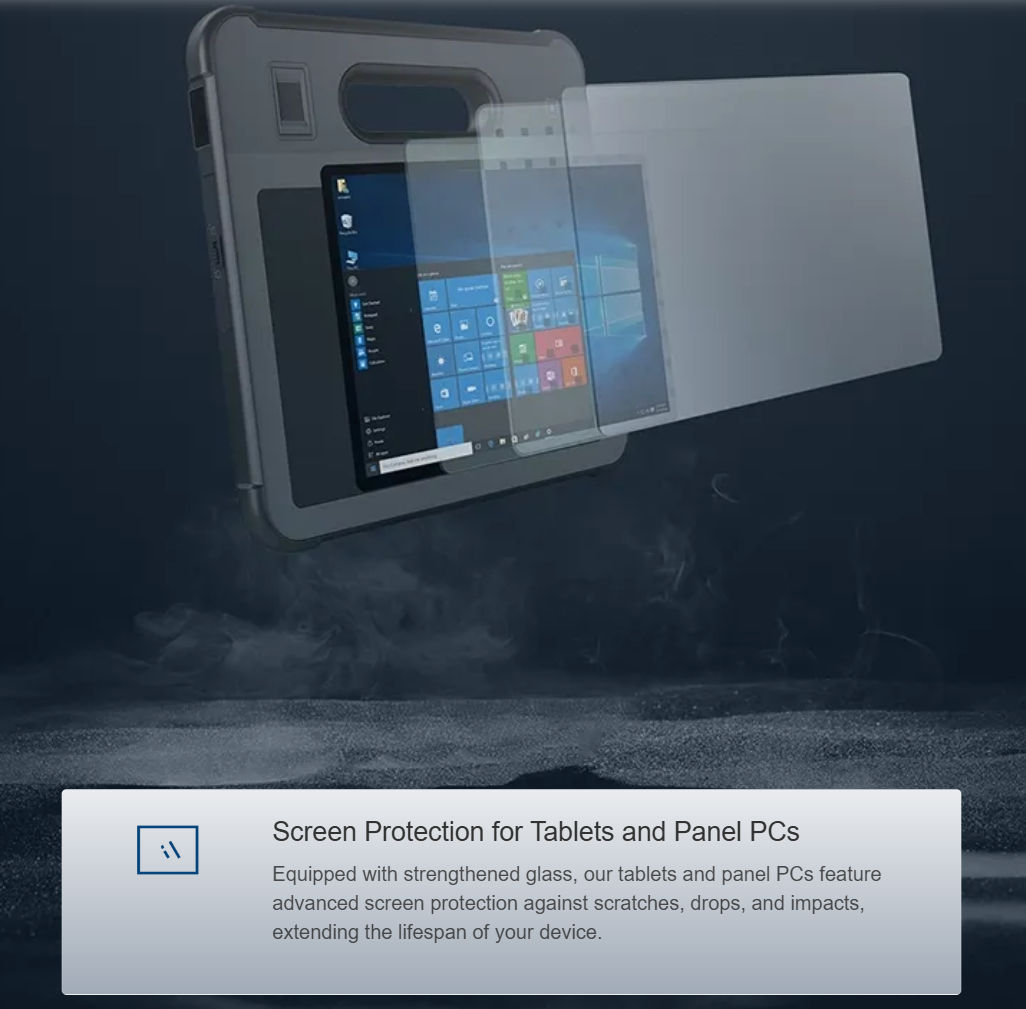
Start with ruggedized hardware: MIL-grade connectors, sealed enclosures, and industrial power management reduce physical failure modes. Pair that with modular network stacks—containerized link managers, SIM provisioning services, and a small edge compute node to run watchdog processes and local buffering. Use link aggregation and weighted routing to preserve telemetry ordering and minimize latency variance. And yes, integrate a certified rugged tablet odm or similar device where touch, sunlight readability, and field replaceability matter for ops people on a hot runway.
Common mistakes to avoid
Teams often assume carrier failover will be transparent; they skip stress testing. They forget to simulate simultaneous handoffs across three carriers, or they ignore stateful sessions that break when IP addresses change. Another trap: relying solely on cloud buffering—when the uplink dies, cloud buffers are unreachable. Also, deploying complex orchestration without a simple local fallback creates a brittle stack—so keep an atomic local control path for emergency landings.
Implementation checklist
Practical steps that save hours and lives: produce a failover matrix mapping carriers to priority; bake link health metrics into the UI; enable persistent telemetry archives on the edge for post-flight reconstruction; and deploy automated acceptance tests that emulate carrier loss. Keep logs compact, signed, and time-stamped with monotonic clocks so replay and legal auditing remain intact.
Three golden rules to evaluate a hardened GCS
1) Mean Time to Recovery (MTTR) under multi-carrier loss: measure how fast control and telemetry streams reconstitute to within mission-safe latency. That number must be under your mission-defined threshold. 2) Telemetry continuity ratio: percentage of telemetry frames received during failover windows, with priority frames guaranteed via QoS tagging. 3) Operational ruggedness score: combine environmental tolerance (temperature, ingress), connector durability, and maintainability—because devices that fail in the field nullify great software.
The tech choices above are practical, measurable, and human-centered—engineered so pilots, operators, and ground crews spend less time troubleshooting and more time flying. — Estone.