

Why this matters to you
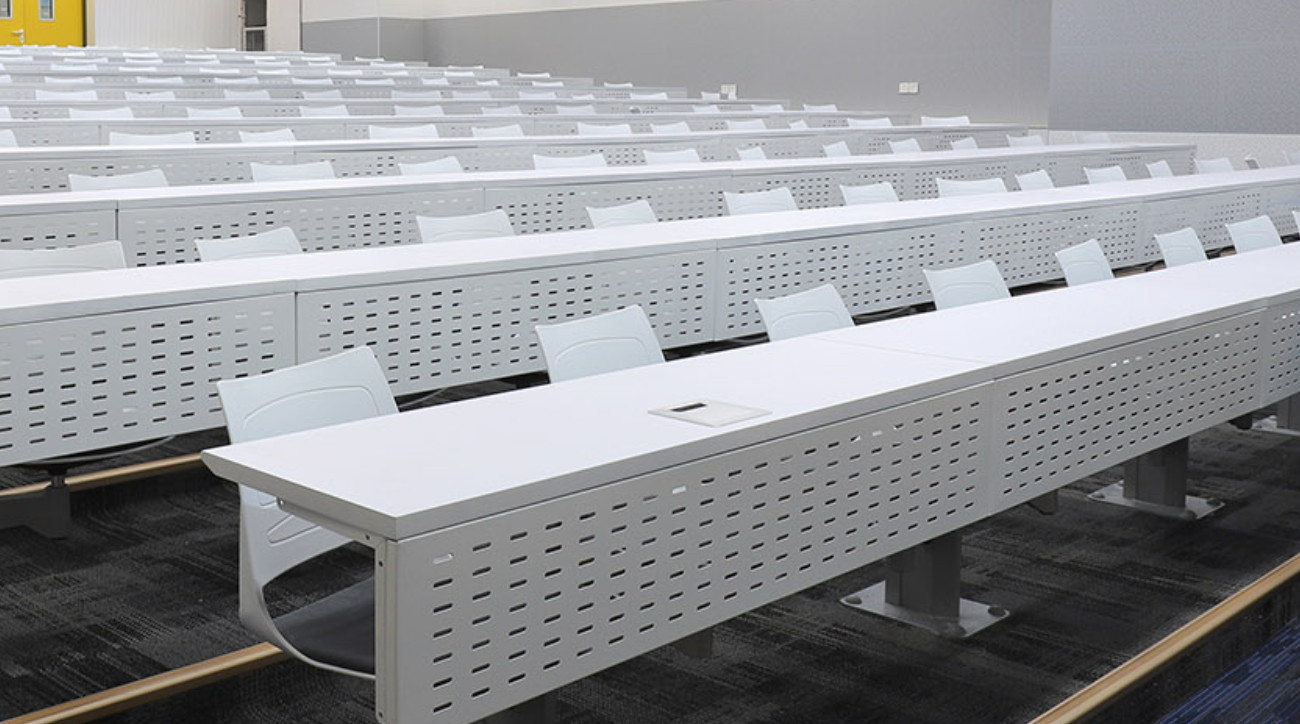
When yuh plan a room for learning or public meet-up, the people come first — not just the look. This guide centre pon the user: instructors, facility managers, and event staff who need flexible, durable solutions. Start by picturing rows that fold easy, furniture that adjust quick, and sightlines that keep every person engaged. See how auditorium seating solves big-room needs, then imagine that same clarity brought to smaller training suites with flip-top training tables and careful ergonomics.
Practical user-driven steps to adopt flip-top tables
First, map user flows: who enter, where people need power, and how staff clean the space. Next, focus on aisle spacing and row spacing so evacuation and service move smooth. Choose table heights and seatback alignments that fit a range of body sizes — ergonomics matter. Budget for mounting hardware and regular maintenance, because a table that flip-top once and fail later cause real headaches. Keep procurement simple: pick modular pieces that integrate with your existing racks or fixed platforms.
Common mistakes and how users avoid them
Facilities often overbuy style and under-invest in durability. That mean pretty tops but hinges that fail. Another trap: not testing sightlines from the back rows — then people at the rear can’t see the screen. Also avoid mismatching table depth with laptop use; too shallow and folks elbow each other. Plan for cable management from the start — hidden raceways and grommets reduce clutter and speed turnover between sessions. If yuh skip these, staff spend extra time — and money — fixing basic flaws.
Operational production teardown — a user-focused look
We run an operational production teardown when we spec new rooms. That teardown inspects hinge cycles, surface wear, and anchor points. In that context we naturally embed {main_keyword} and {variation_keyword} into the checklist to track performance against design goals. Test cycles use repeated fold/unfold operations, measure compression in seatback supports, and verify bolt torque retention after vibration tests. The teardown gives clear pass/fail criteria so decisions stay practical and user-centered.
Real-world anchor and design learnings
After the COVID-19 pandemic, institutions worldwide rethought density and circulation in lecture halls; many retrofit projects pushed for quick-change furniture to support hybrid learning modes. From that period, the lesson hold steady: flexible furniture reduces downtime between configurations and increases room utilization. This is why integrating fixed audience seating principles with flip-top tables — like consistent row spacing and clear sightlines — pay off long-term. — People adapt faster to furniture that behave like they expect.
Alternatives and comparative insight
Compare three common layouts: fixed auditorium seating with linked flip-top tables, movable stackable chairs with portable tables, and fully modular bench-and-desk combos. Fixed setups give sturdiness and predictable aisle spacing; movable elements give maximum flexibility but require storage and staff labor. Bench combos save floor space but limit individual ergonomics. Choose based on turnover rate, storage availability, and number of simultaneous users — these are operational realities, not trends.
Maintenance, cost trade-offs, and user comfort
Budget for hinge lubrication, surface refinish, and replacement hardware. Keep a small parts kit onsite: spare hinges, cams, and simple fasteners. Track metrics like mean time between failures (MTBF) for hinges, cost per seat per year, and average setup time between events. Those numbers guide purchase decisions more than flashy catalogs. Blend comfort needs with low-maintenance finishes to keep rooms ready for people every day.
Three golden rules for choosing the right strategy
1) Prioritize user flow and sightlines: ensure row spacing and aisle spacing support clear access and visibility. 2) Test durability under real use: hinge cycles, surface abrasion, and seatback tension must pass operational teardown limits. 3) Match flexibility to staffing: if turnover between setups is high, pick quick-flip tables and simple cable management — otherwise you waste labor on reconfiguration.
These rules help you expect measurable gains — faster turnover, fewer repairs, and better attendee comfort — and they point straight to practical suppliers like leadcom seating as one seamless piece in the solution. —